
Newsletter No. 4: A Glimpse into My Life in the US
Welcome!
If you've joined my mailing list recently, thank you! I’m so grateful for your interest in my life and ministry.
In this newsletter, I’ll give you a glimpse into my everyday life in the US, share a few highlights from the past couple of months, and tell you what's coming up next.
You can also find out more on my page on the Wycliff website, and I wrote an article about my internship in Ethiopia last year, which will soon be published in the Wycliff Germany Online Magazine.
What My Life in the US Looks Like
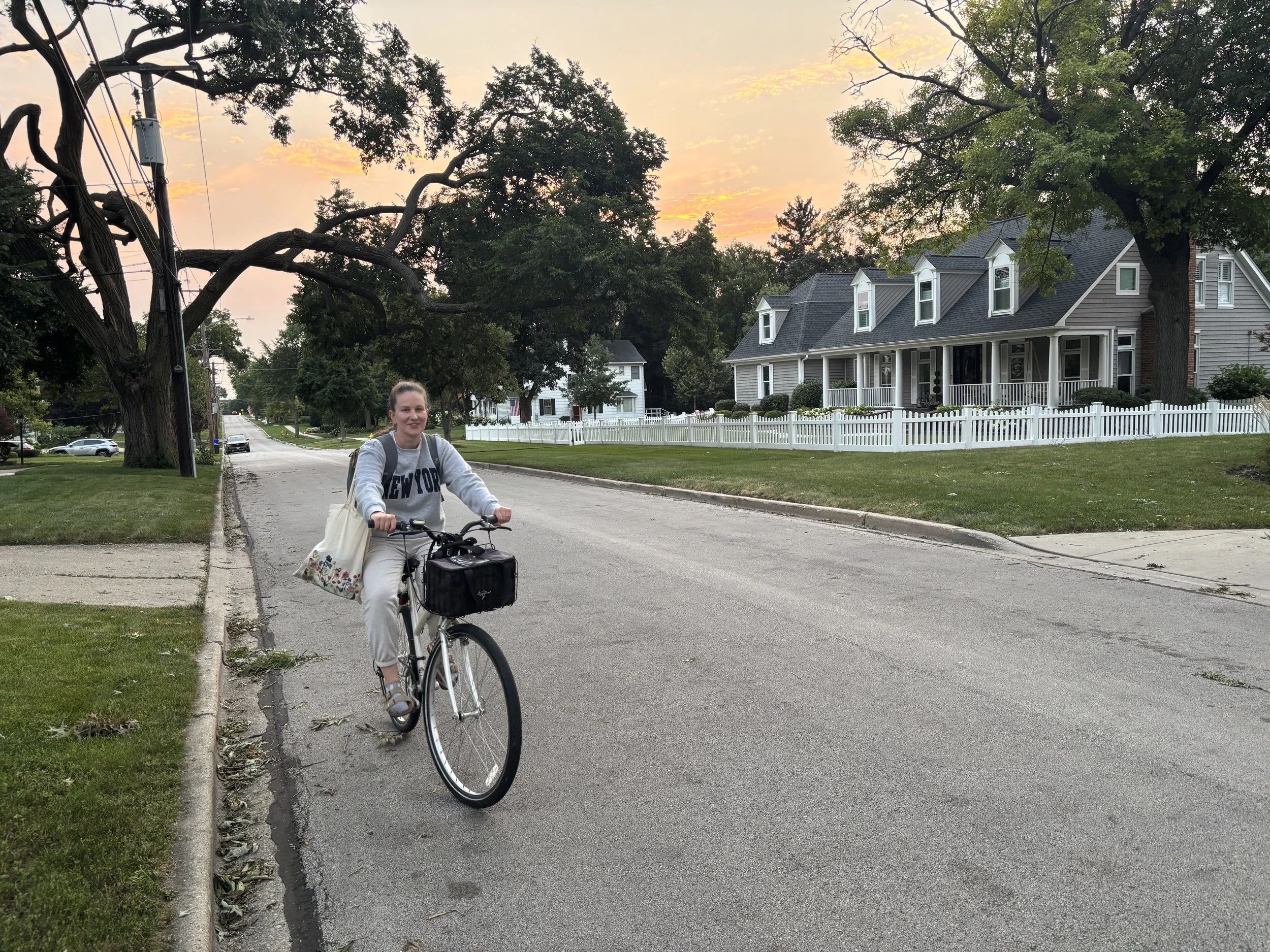
I'm currently based in Wheaton, a lovely suburb of Chicago. One thing that amazes me is how flat everything is! I miss the mountains, but there is one advantage: cycling is much easier when you don't have to climb any hills. Since I don't have a car, my bicycle is my main means of transport. Although the US is very much designed around cars, I'm grateful that getting around Wheaton by bike is still manageable.
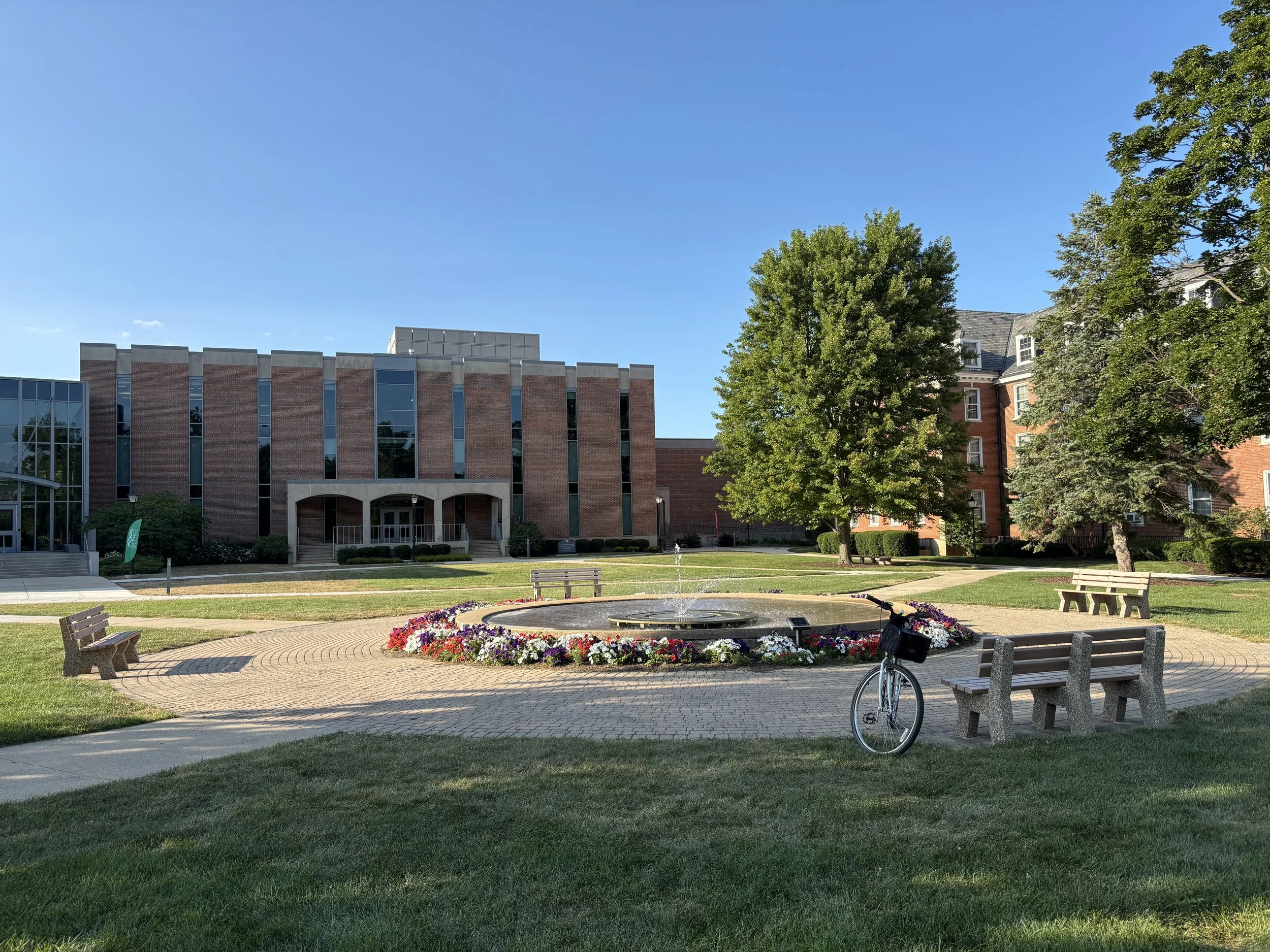
The streets all look the same: a wide road lined with trees, a sidewalk on either side, and then houses. There are also plenty of parks, and the college campus itself has lots of trees, fountains, and lawns where students can relax. In summer, Wheaton is a very green and inviting place.
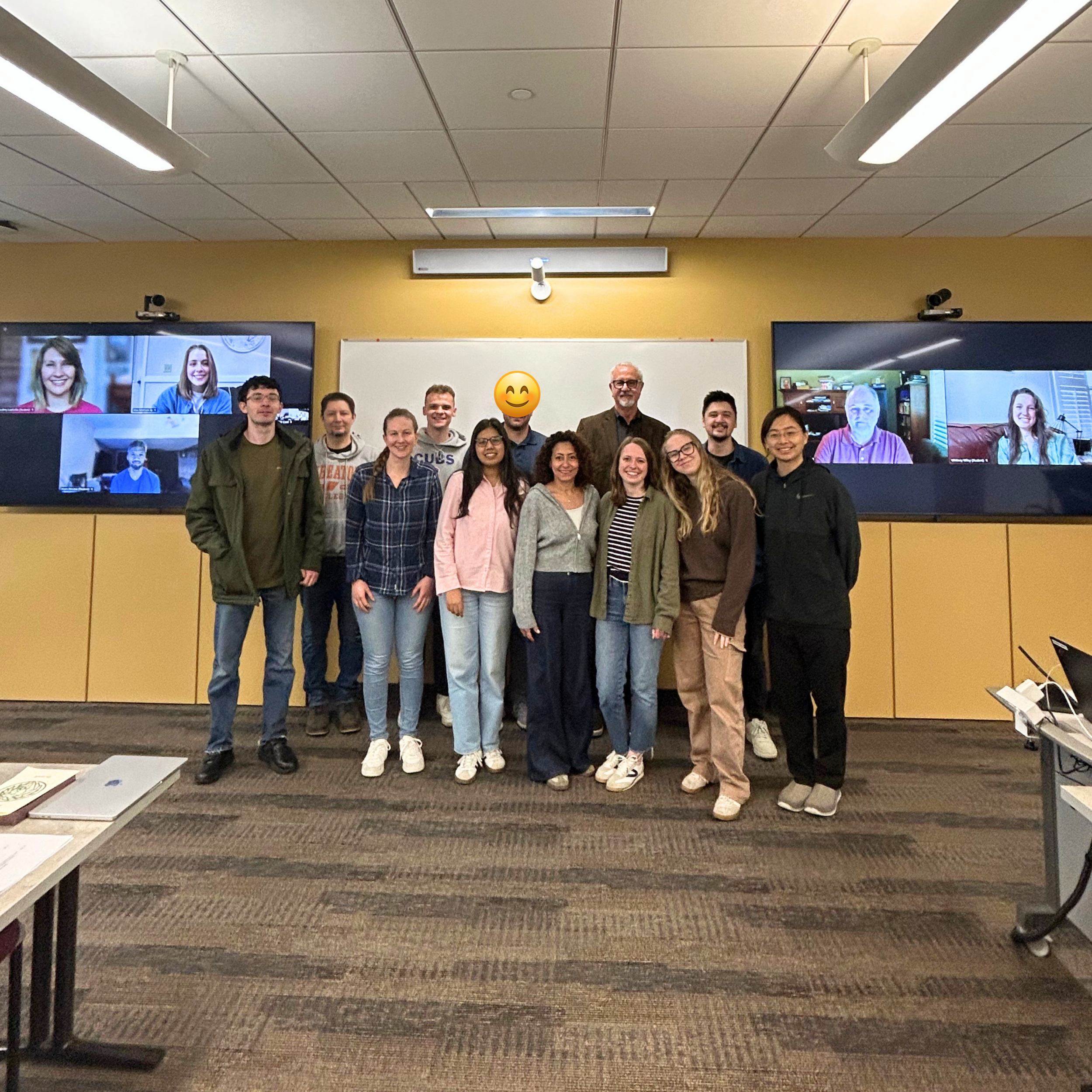
My mornings are usually spent in class, with about twenty other students from all over the world. Our classes are hybrid, so some students are in the classroom, and others join online. This year I have taken two theology courses: New Testament Theology (What does the New Testament teach?) and Christology (Who is Jesus Christ?), and two exegesis courses, which involve studying individual books of the Bible in depth: Amos, a prophetic book from the Old Testament, and the book of Acts from the New Testament.
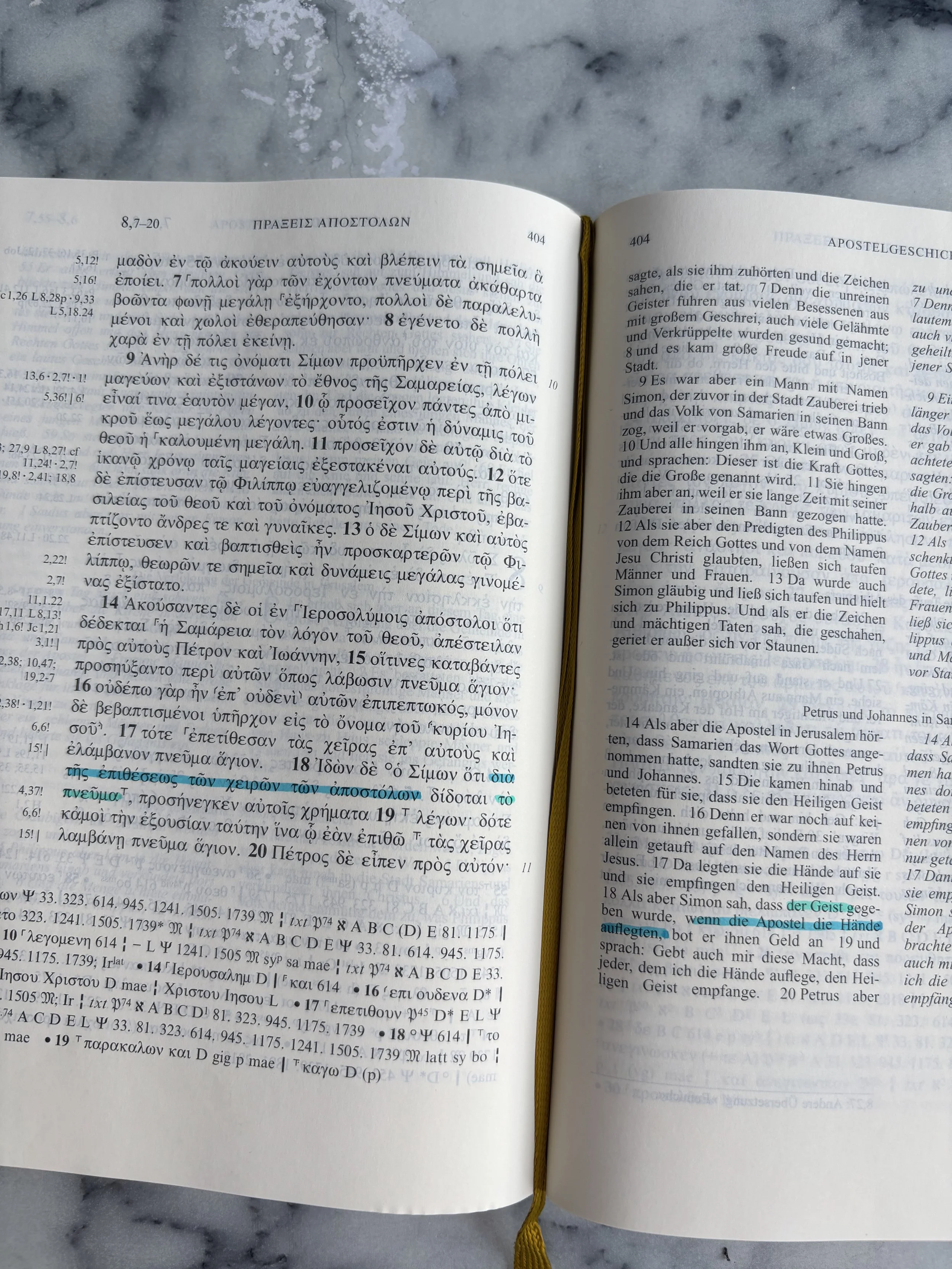
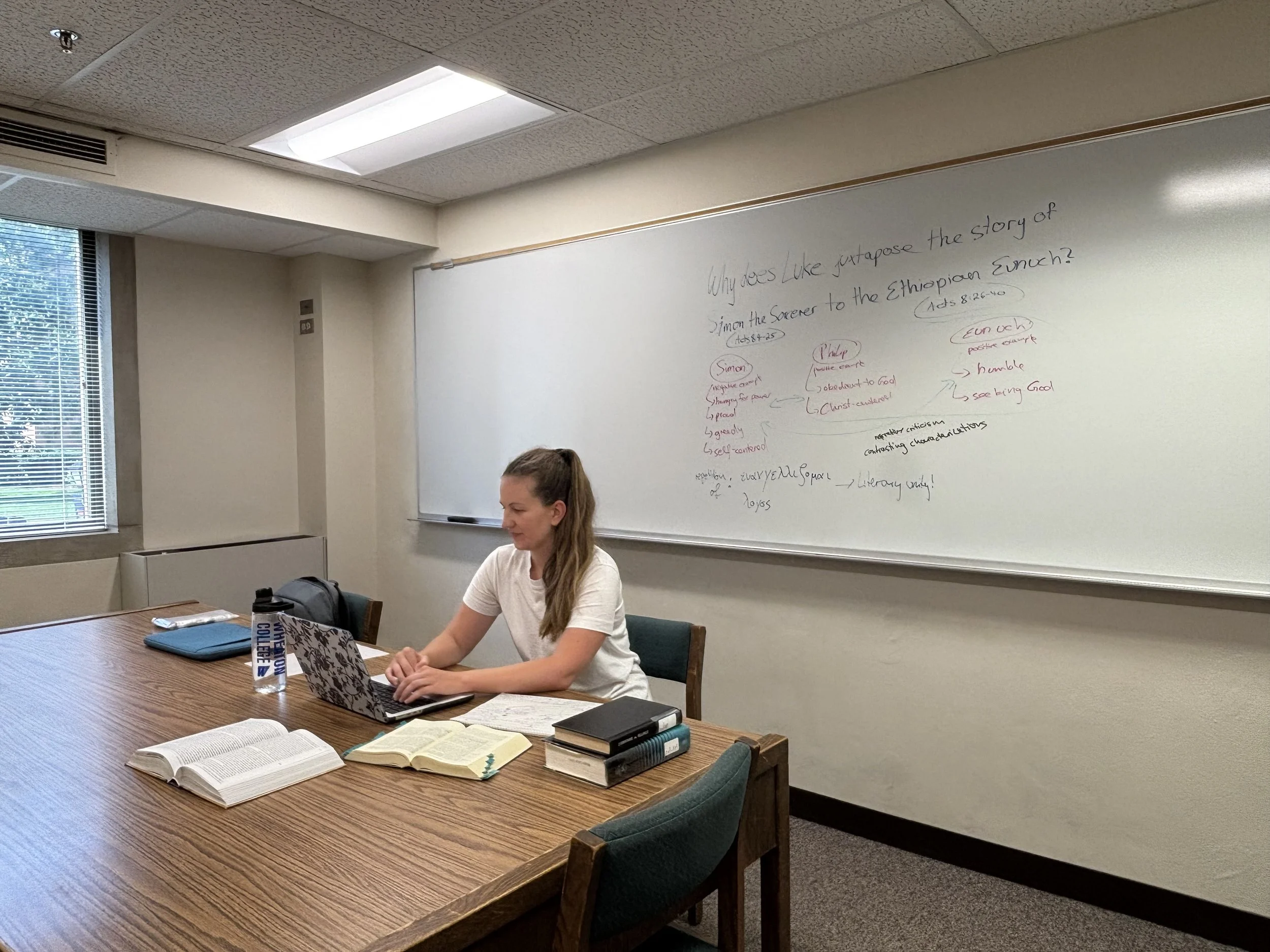
I particularly enjoy the exegesis courses because we work directly with the biblical text in its original language. Every week we translate a passage from the Hebrew (Amos) and the Greek (Acts), and then discuss the translation and interpretation together in class. It's challenging, but so rewarding.
An Example of Exegesis from the Book of Acts
In Greek, word order is much more flexible than in English, so authors often move words to the beginning of a sentence to give them special emphasis. In Acts 8:18, a magician called Simon the Sorcerer tries to buy the Holy Spirit upon seeing that people receive the Spirit when the apostles lay their hands on them. Luke (the author of Acts) arranges the sentence so that the method of receiving the Holy Spirit ("through the laying on of the apostles' hands") comes first, while "the Spirit" comes last. In doing so, he shows that Simon is interested not in the Holy Spirit himself, but only in the power to impart the Spirit.
Greek: ἰδὼν δὲ ὁ Σίμων ὅτι διὰ τῆς ἐπιθέσεως τῶν χειρῶν τῶν ἀποστόλων δίδοται τὸ πνεῦμα
Word-by-word English translation: Seeing but Simon that through the laying on of the hands of the apostles is received the Spirit”.
The challenge for Bible translation is: How can this emphasis be reflected in another language where word order isn’t as flexible? Some English translations try to preserve the original emphasis by following the changed word order: “when Simon saw that through the laying on of the apostles' hands the Spirit was given” (ASV, KJV, WEB). But this makes the verse sound a little awkward and unnatural. Other translations try to make the verse easier to read by changing the word order, but lose the original emphasis in the process: “when Simon saw that the Spirit was given through the laying on of the apostles' hands” (ESV, NET, NIV). Which translation would you prefer: the one that is closer to the original wording, or the one that reads more naturally?
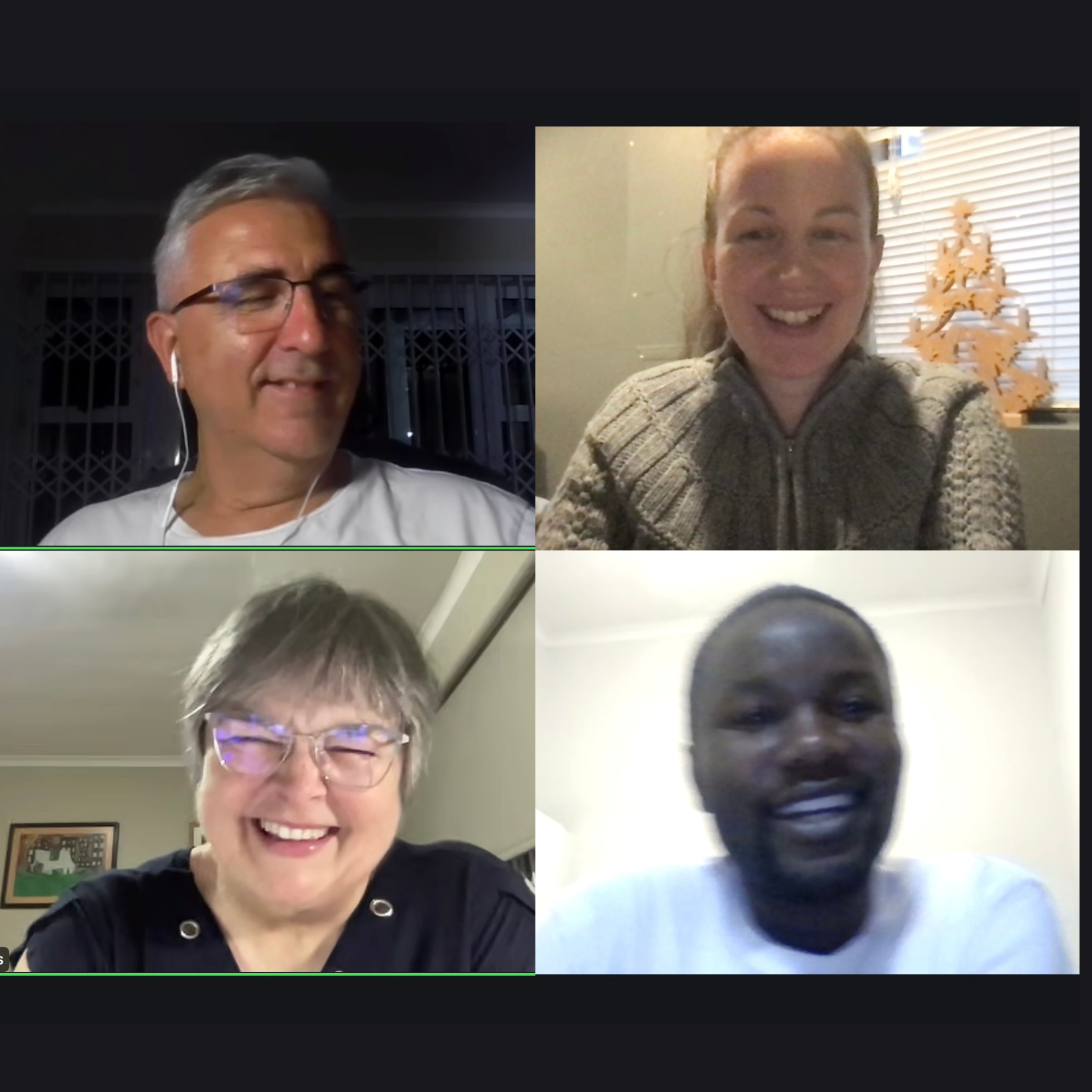
Lunchtime is usually when I catch up with family and friends in Germany and South Africa or with my fiancé, White. Since it's dinner time for him, we often eat together over a video call. I have lunch, and he has dinner.
In the afternoons, you'll usually find me in the library, doing my translation homework and working on assignments. On Tuesdays, Thursdays, and Fridays, however, I work at the college's sports complex. Like many students in the US, I have a campus job to earn some extra money. My job is to do the laundry for Wheaton's sports teams, washing their towels and uniforms. Thankfully, there isn't a constant stream of laundry, so I'm allowed to bring my laptop and work on assignments while the washing machines are running.
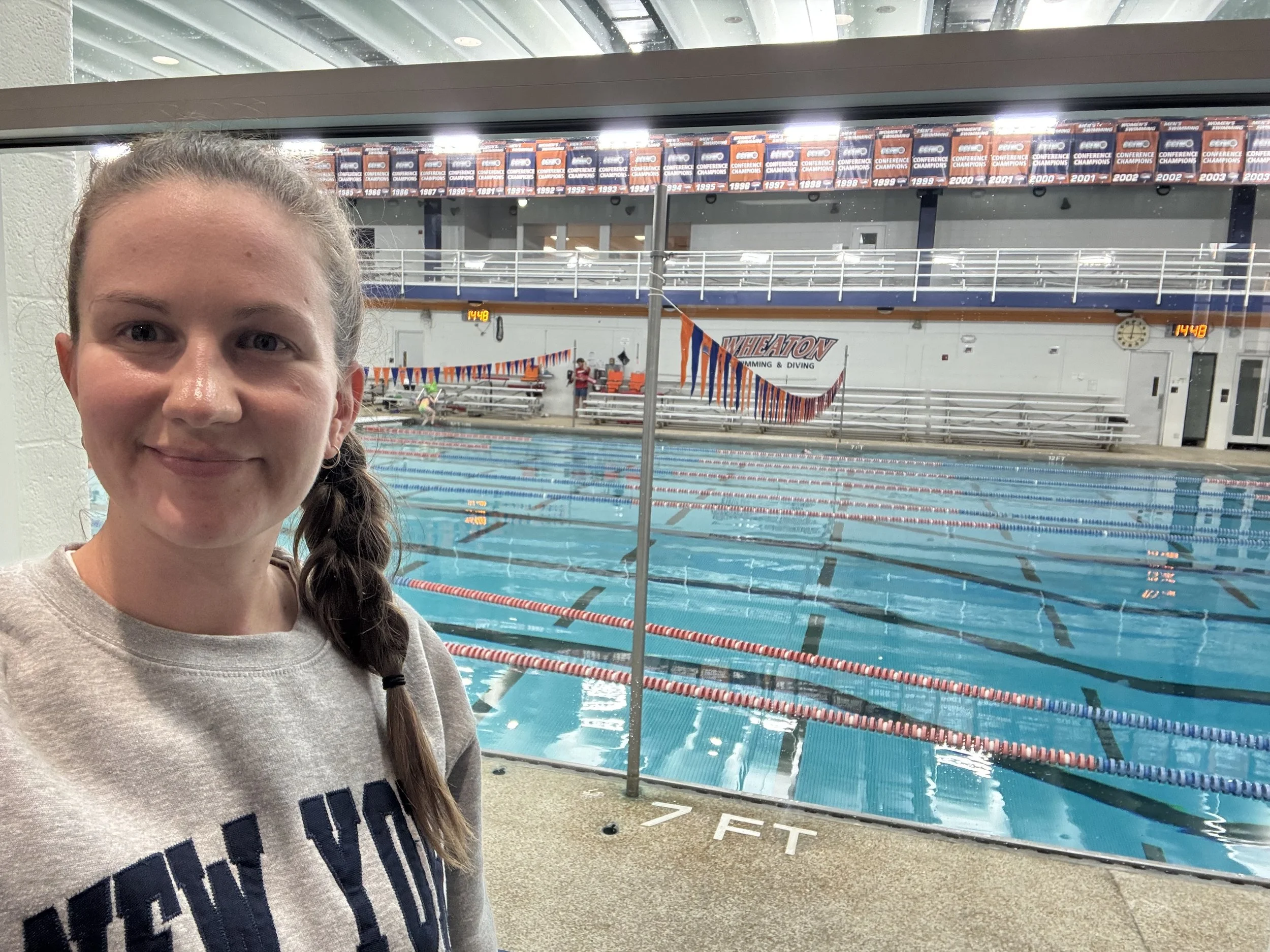
My evenings vary from day to day. Sometimes I go for a swim in the college pool, and sometimes I spend time with friends. On other evenings, I volunteer at my church, which offers tutoring for high school students who have recently immigrated to the US from Spanish-speaking countries and are struggling with school because of the language barrier. I help them with their homework, practice English with them, and sometimes just talk about life.
I also meet regularly with two students who are learning German. We spend an hour chatting in German to help them improve their language skills. Many influential theology books have been written in German, so knowing the language is a huge advantage for anyone who wants to seriously study the Bible. I'm grateful that God has given me German as my native language, and it's a joy to use that gift to bless others.
I'm not the only German at Wheaton, by the way. There are two others: Ruben, who is doing a Master's in “Teaching English to Speakers of Other Languages & Intercultural Studies”, and Christoph, who is doing his Master’s in “Evangelism and Leadership”. We meet up regularly, and it's always refreshing to speak German together and share our experiences.
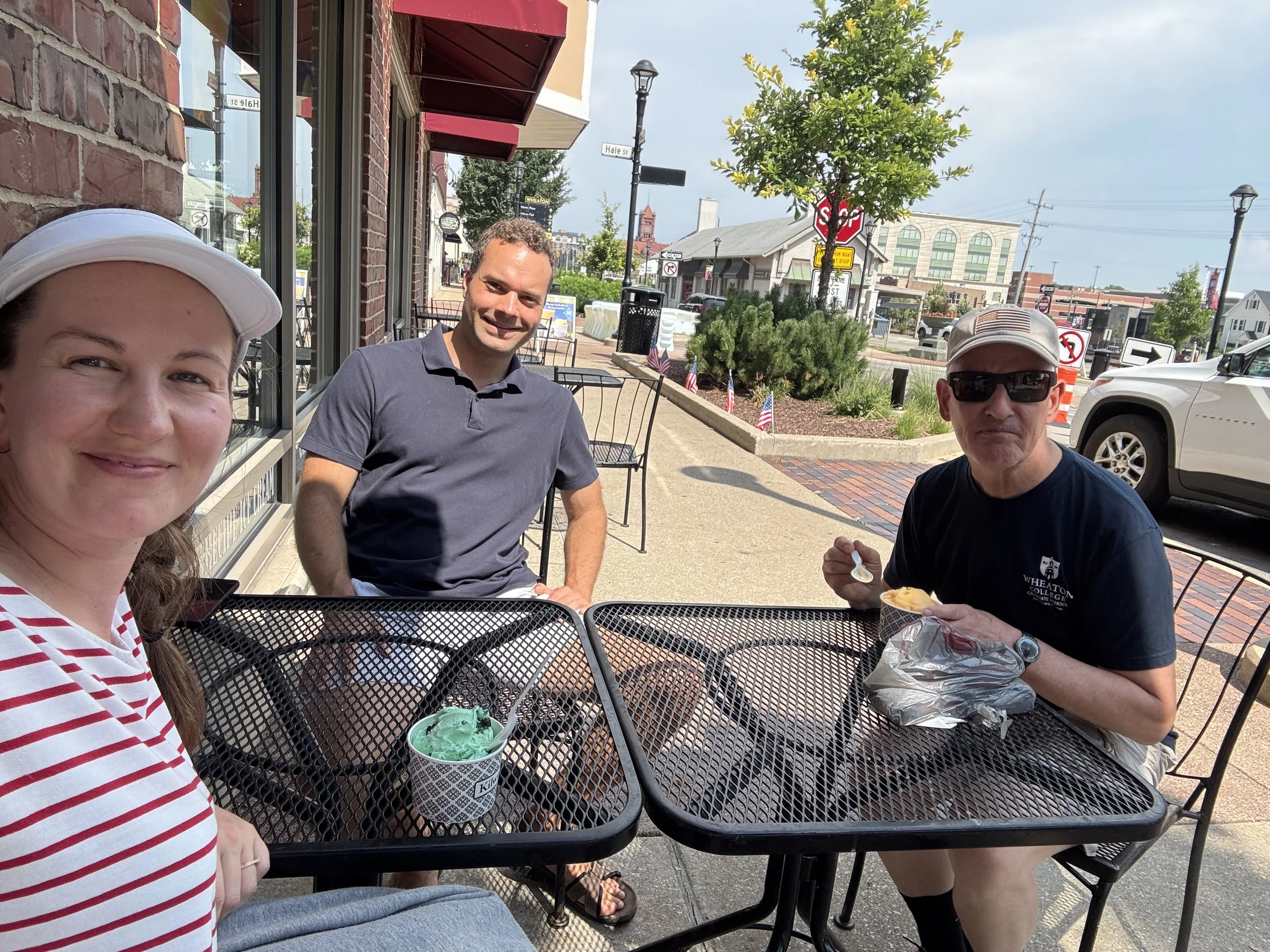
Most Americans I have met are friendly, kind, and generous. It's completely normal for strangers to start conversations in grocery stores, coffee shops, or on the train. People notice one another. A couple of months ago, I was walking my bicycle home after getting a flat tire when I ran into a classmate. She immediately loaded my bicycle into her car, drove me to the bicycle shop to get the tire fixed, and then took me home afterward. Friends also regularly offer to drive me to the grocery store since I don't have a car. One time, someone even paid for my groceries. The same thing often happens in coffee shops, where people not only pay for their own coffee but also for the next customer.
What I don’t like at all is the weather here. It’s way too cold in winter (-20 degrees), and the summer is very humid and often brings thunderstorms or even tornadoes. Last week, a storm damaged power lines in Wheaton so that we lost electricity for 3 days.
Highlights from the last months
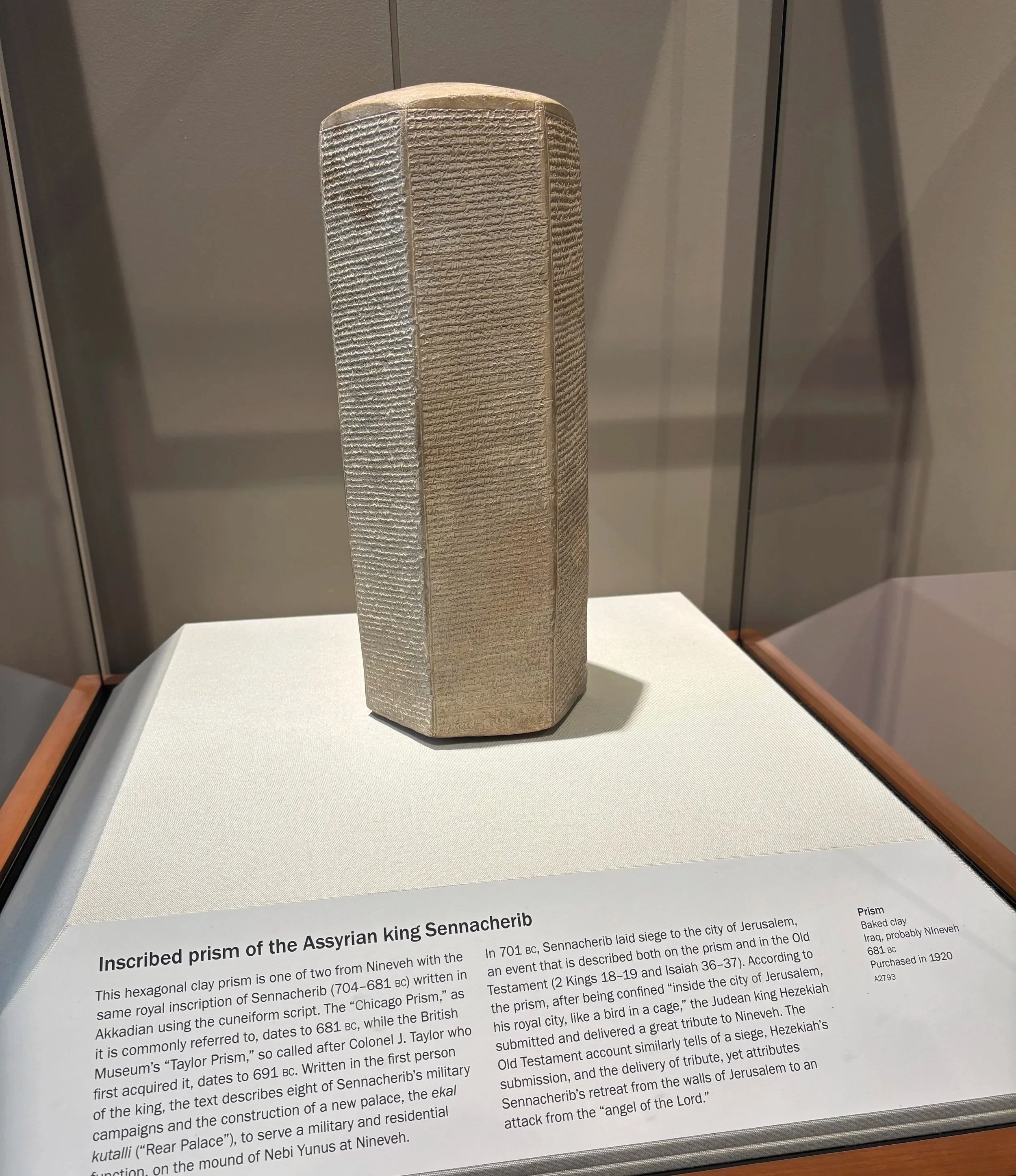
One advantage of studying in the US is that so many artifacts from biblical times are in museums here, and I’ve had the privilege of seeing some of them with my own eyes. One of our professors, John Walton, took our class to the Institute for the Study of Ancient Cultures in Chicago, which exhibits a clay prism from the 7th century BC on which the Assyrian king Sennacherib recorded his military campaign against Jerusalem, the same events described in 2 Kings 18–19 and Isaiah 36–37.
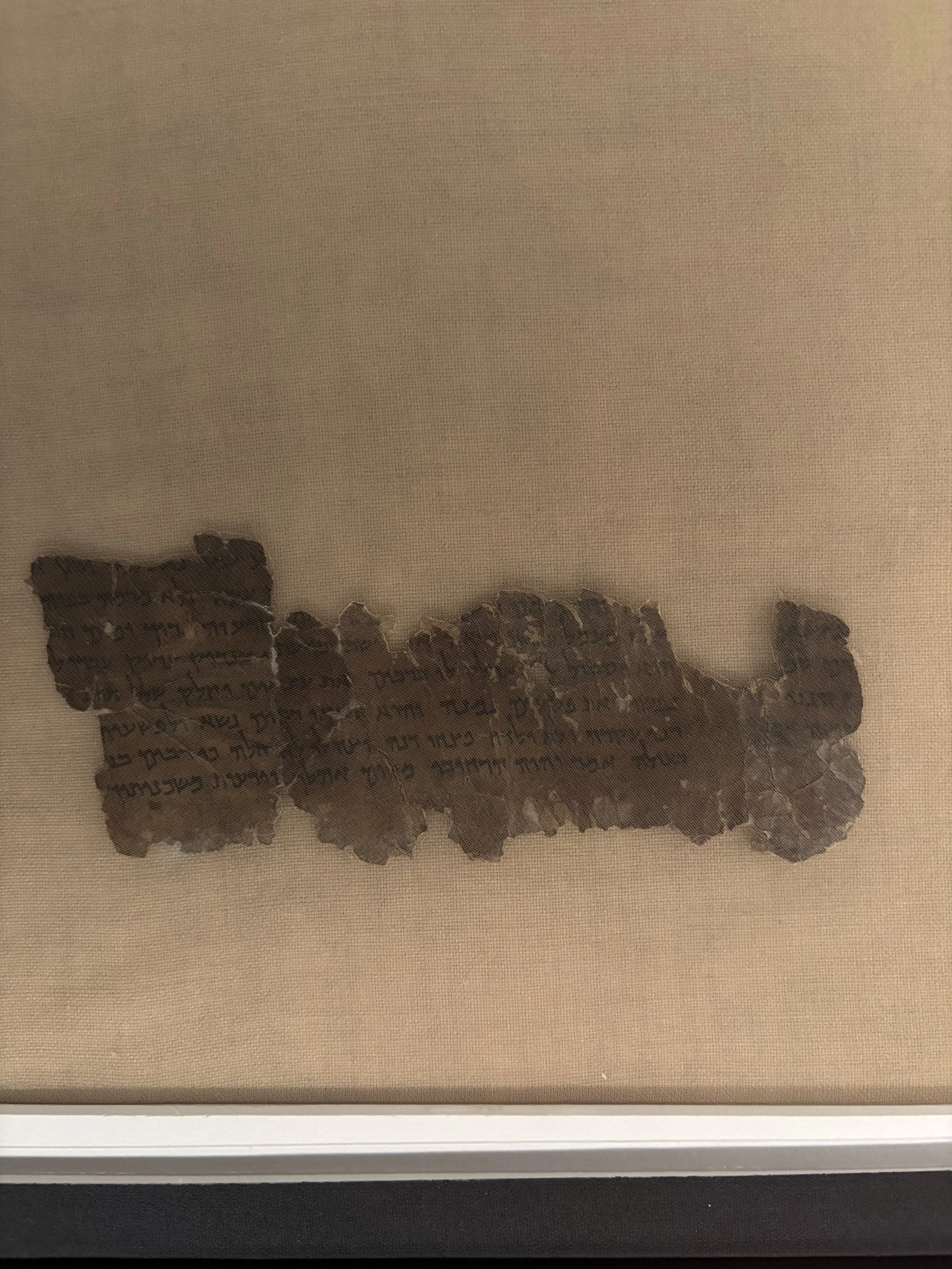
Another highlight was visiting the Museum of the Bible in Washington, DC, where the Dead Sea Scrolls are currently on display. These manuscripts of the Old Testament and other ancient Jewish writings date from the 3rd to the 1st century BC and were discovered in caves near the Dead Sea in 1947. I was so excited to see an original manuscript from the book of Isaiah.
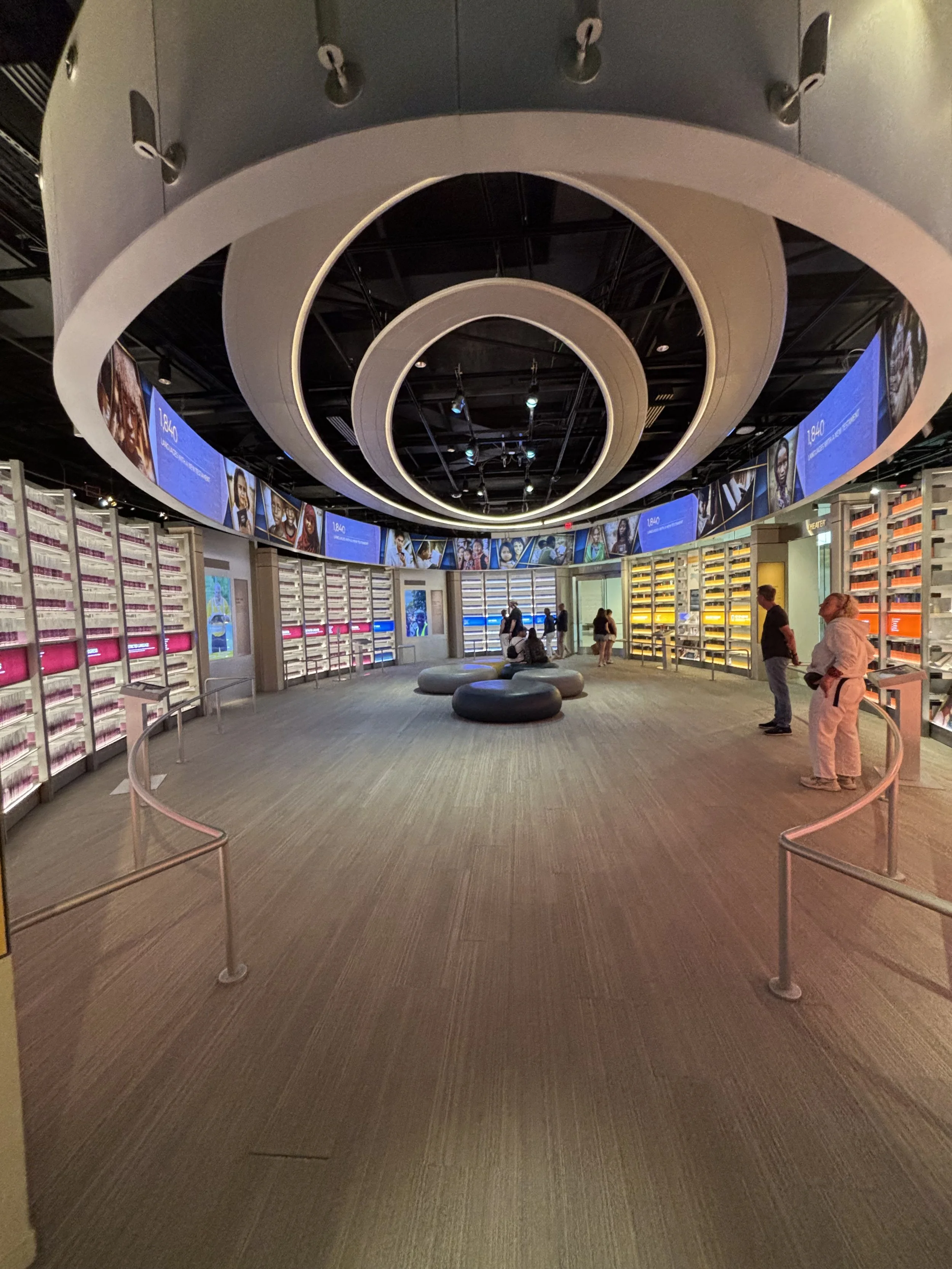
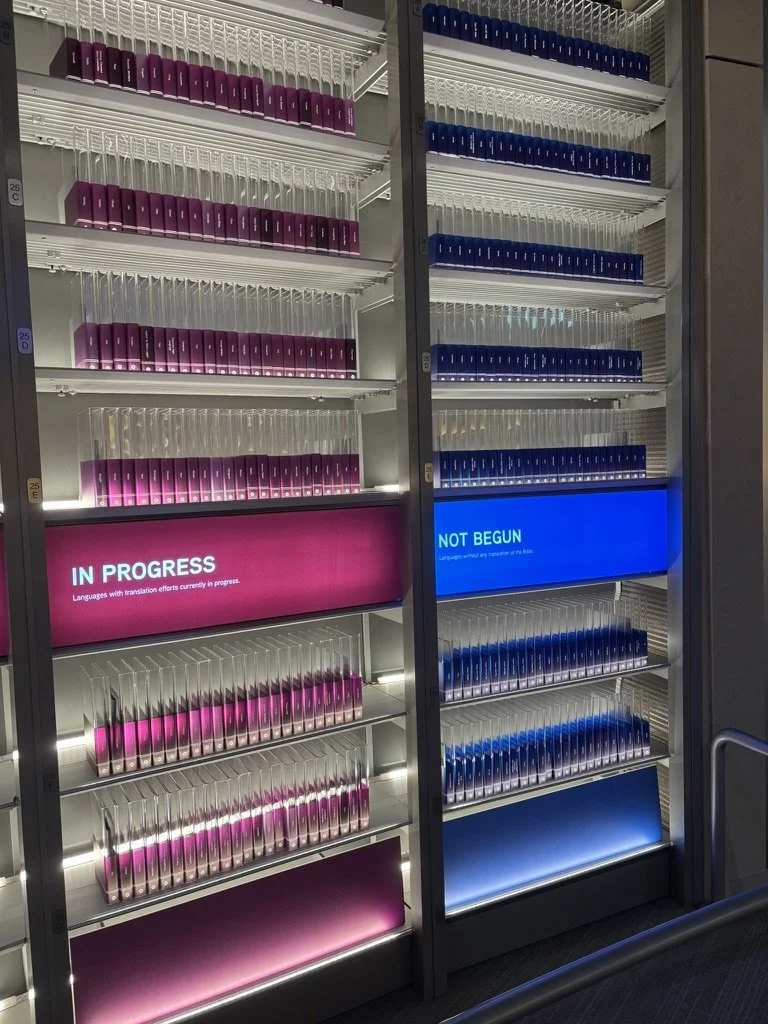
The museum also has an impressive exhibit on Bible translation. 29 giant bookshelves are arranged in a circle to represent the world's languages. 4 shelves are filled with complete Bibles (the yellow ones in the picture below), 6 with New Testaments (orange), and the remaining 19 contain only empty cases, symbolizing the thousands of languages that still have no Bible translation (pink and blue). A very impressive way of bringing the statistics to life and showing how much work remains to make God's Word accessible to everyone.
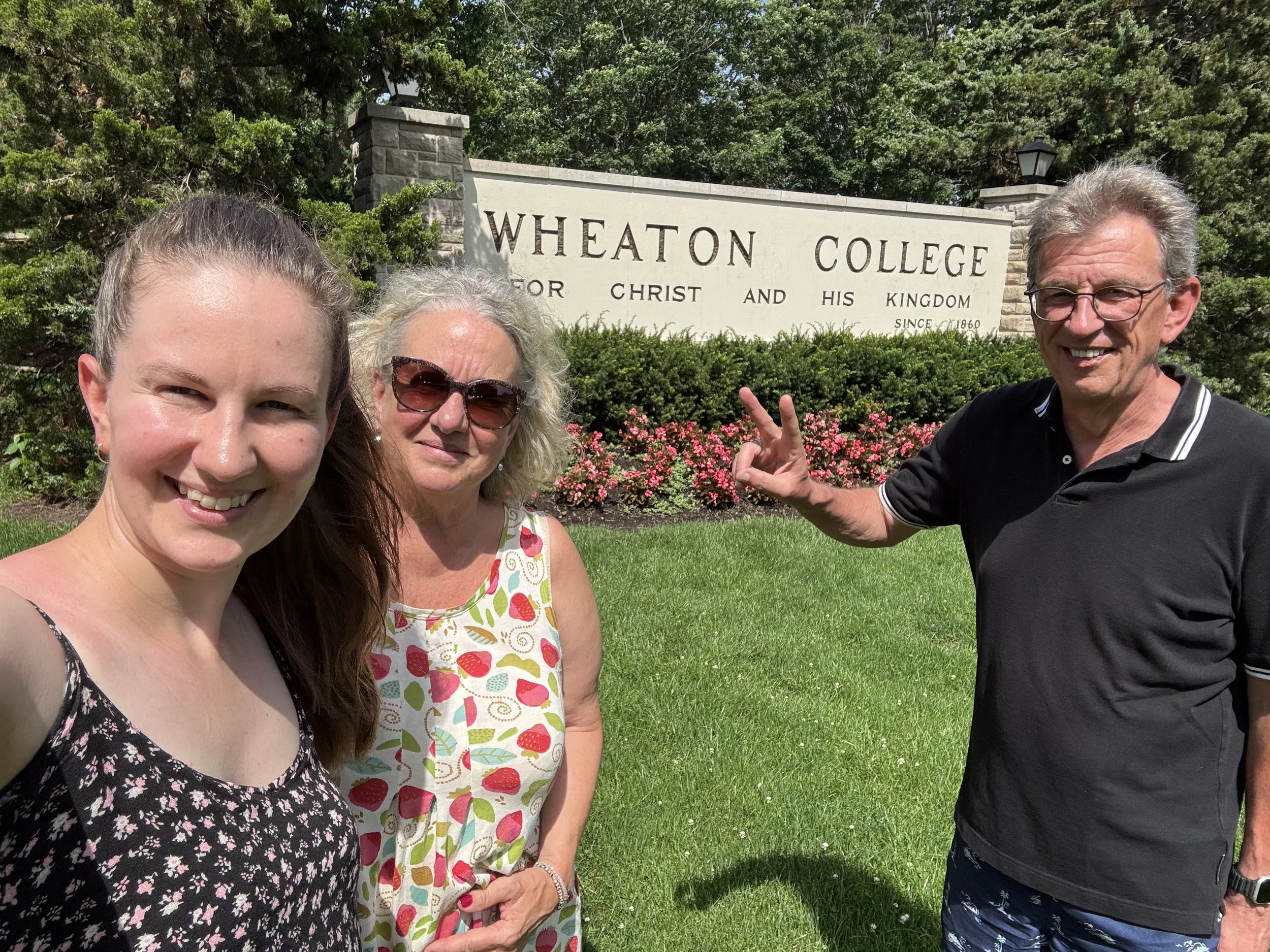
Another highlight was having my parents visit me in the US. It was wonderful to spend time with them in person, show them around, and introduce them to my friends and the place that has become my home over the past year.
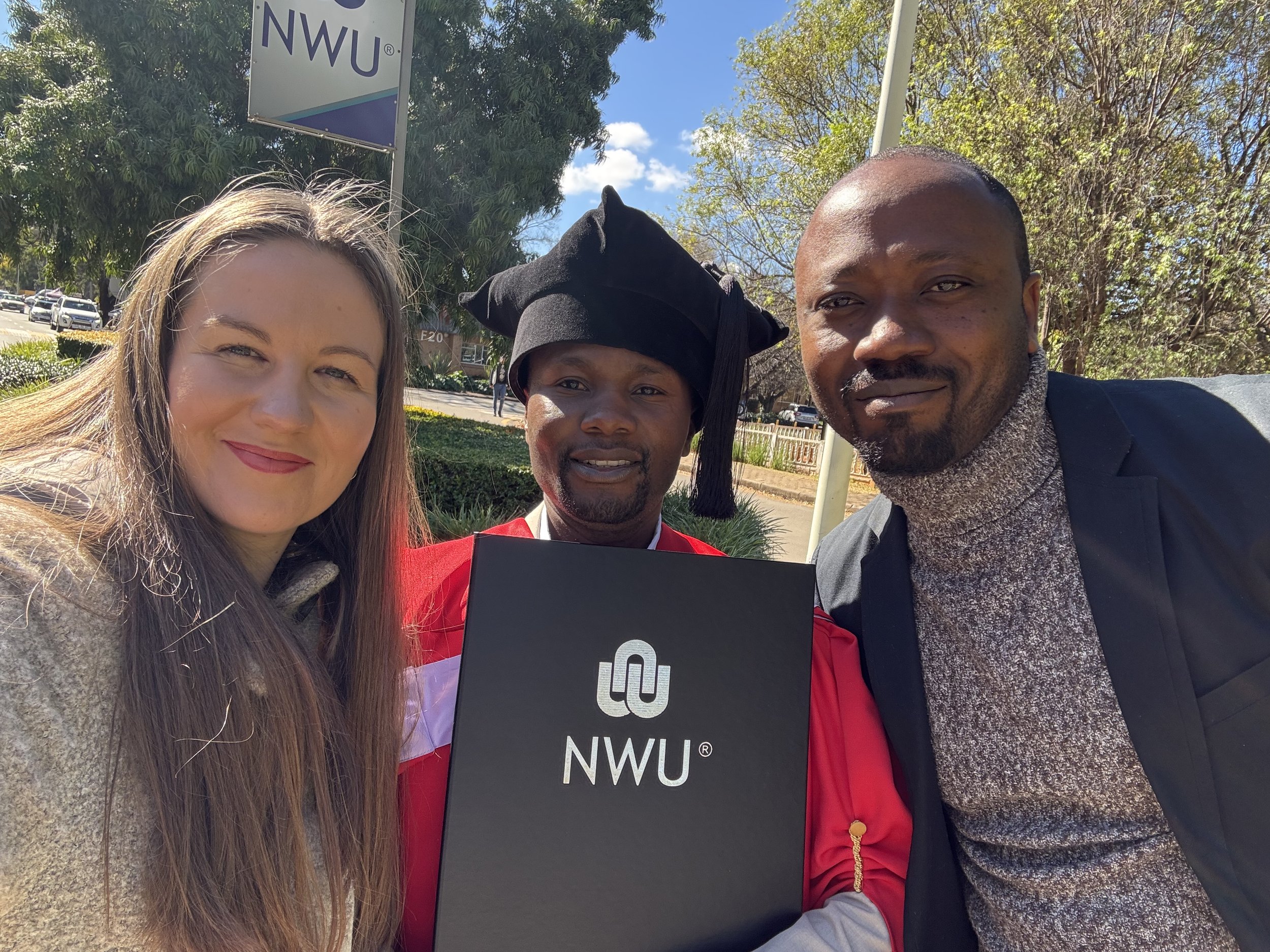
I also had the opportunity to travel to South Africa to visit my fiancé, White, and many of my friends there. We made good progress with our wedding preparations, and by happy coincidence, White's PhD graduation took place while I was there, so I could accompany him and celebrate his achievement with him.
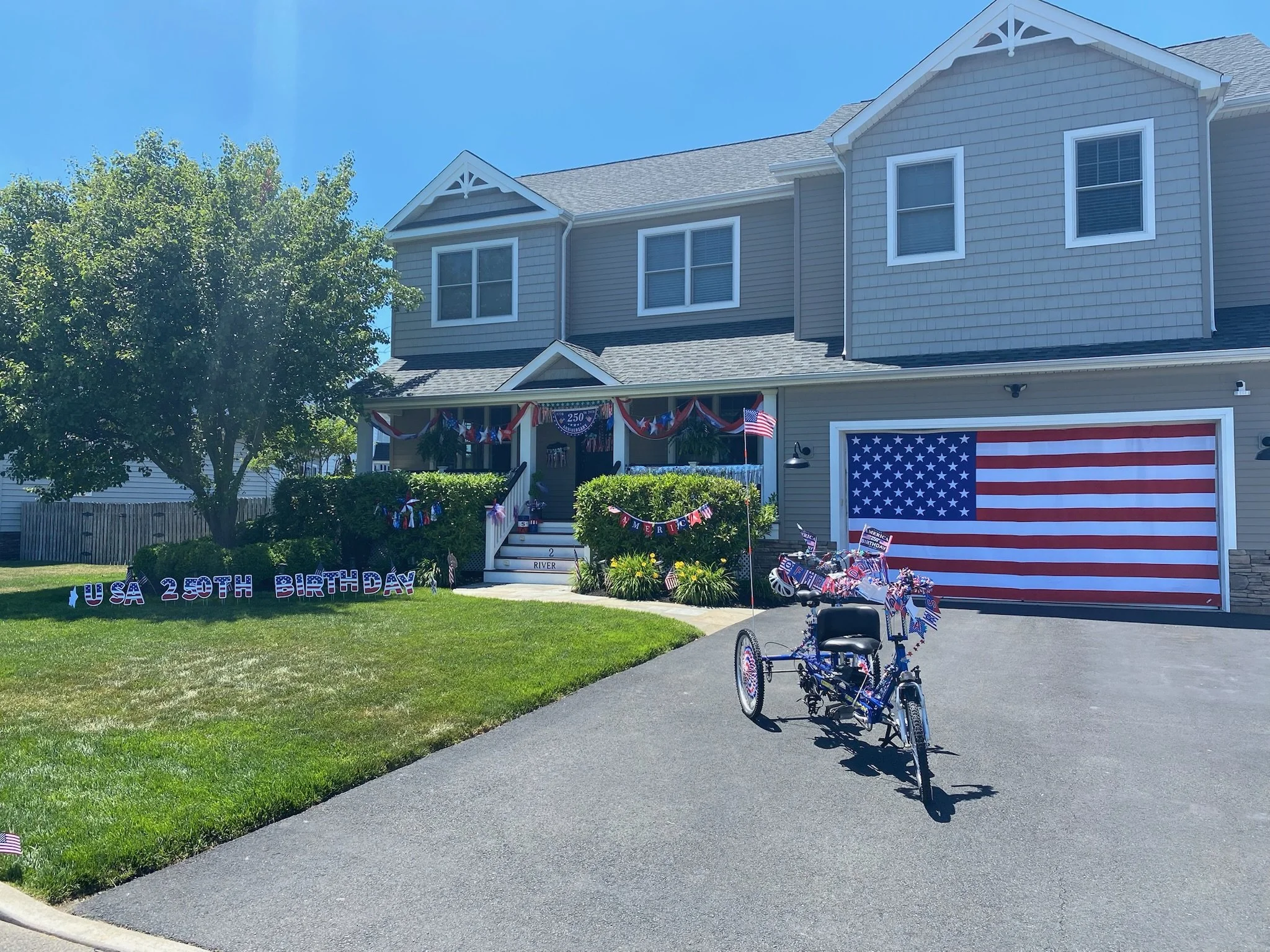
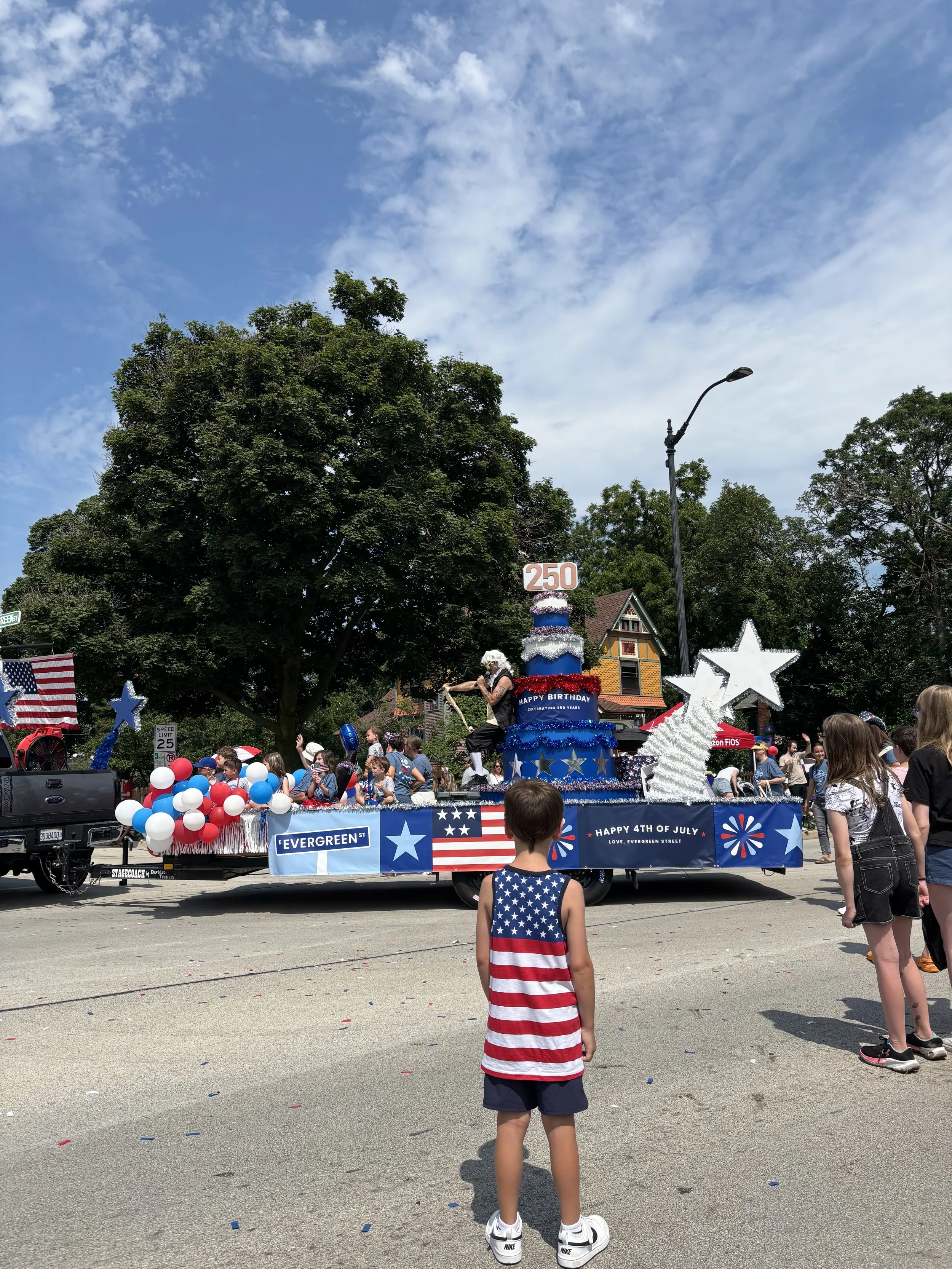
Back in the US, I experienced my first American Independence Day on the 4th of July. This year's celebrations were special because the US was marking its 250th birthday. They organized a huge parade followed by a 30-minute fireworks and laser show.
What’s next?
December 2026 - January 2027
Once I have completed my fourth semester at Wheaton this December, I'll travel to South Africa to get married. White and I are very much looking forward to beginning this new chapter together!
February-May 2027
At the end of January, I'll return to Wheaton for my final semester. After completing my Master's degree, I'll graduate in May 2027 and then head back to Germany.
May 2027-?
I'll spend a few months in Germany to apply for my South African visa and continue building my team of ministry supporters. As soon as my visa has been approved and enough financial support is in place, I can move back to South Africa, where I'll support Bible translation projects so that more people across Africa can read God's Word in their own language. The specific projects I’ll be involved in are still being discussed, and I hope I’ll be able to share more info about that in my next newsletter.
How You Can Support Me
It has been a humbling and joyful experience to see God providing for me through you. As mentioned before, my (future) salary will be funded through donations, for which I depend on the generosity of supporters. Since my last newsletter, 2 more people have joined my support team, which now covers 20% of my monthly support goal. Thank you to all of you who have committed to me in this way. I’m also grateful for all who have supported me with once-off donations, which are just as much of a blessing. Even though many of us are far apart, your care and love mean a lot to me.
For those who want to share with others the privilege we have enjoyed our entire lives, of reading the Bible in our own language, I invite you to become part of my team. There are many different ways to give, and you can find them HERE. Thank you!
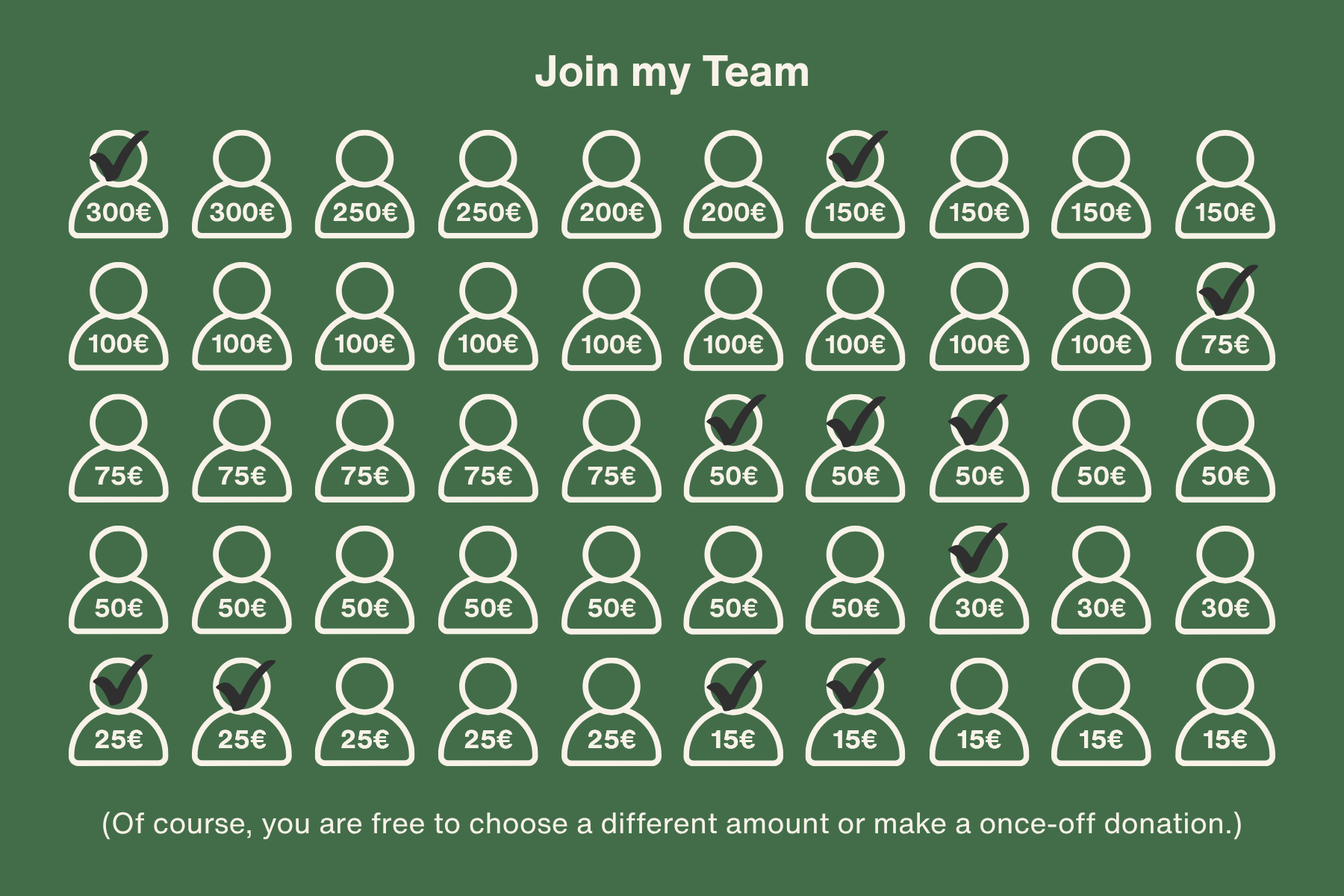
I also want to invite you to continue supporting me in prayer. Here are some ways you can pray with me:
Prayer Points
Thanksgiving: Thank God for
New friendships in the US and a great community that cares about one another.
Time spent in South Africa and with my parents in the US.
Growing partnerships.
Requests:
Wedding preparations to continue going smoothly (especially the paperwork).
That my team of supporters would continue to grow.
Strength and perseverance for studies, work, and other responsibilities I’m juggling.
Sign up to receive my newsletters right to your inbox
Important:
To ensure my emails don’t end up in your spam folder, please add my address (sophia@vom-amt-nach-afrika.de) to your contacts. Thank you!